In November 2008,The European Federation of Farrier Associations (EFFA) will launch the much-anticipated Europe-wide farrrier qualification system to be called "Certified Euro-Farrier". Working farriers who have completed a course of formal training and have achieved national qualifications in a country whose system is recognized as meeting EFFA’s Basic Standards of Competence will be entitled to put CE-F after their names.
Qualified farriers will be awarded a certificate and from 1 January 2009 will receive an annual vehicle window sticker.
Countries currently registered as being eligible are Switzerland, Holland, Austria, Great Britain, Denmark and Finland. Other countries will be accredited as they reach the necessary standard.
The farrier associations in each country will be responsible for submitting the names of those eligible and for keeping the record up to date with additions and removals. Names and contact details of CE-Fs will be published on EFFA’s website (www.eurofarrier.org).
The aims of the Certified Euro-Farrier scheme are to :
• Provide recognition for those who have achieved the necessary standards of competence;
• Provide a means of identifying competent farriers from other countries. This is particularly important for horse owners in view of EU legislation allowing farriers to practice in other countries purely on the basis of experience; and
• Encourage countries without qualifications or with lower level qualifications to raise standards of farriery to meet the EFFA standard.
Membership in EFFA is open to all farriery associations in all European nations, whether they are members of the EU or not. Current member nations are: Sweden, Finland, Denmark, Germany, France, Austria, Switzerland, Great Britain, Ireland, Holland, Spain, Iceland and the Czech Republic. However, not all nations have education and testing systems that comply with the eu-farrier qualification system at the start.
Germany, for instance, has a farrier training and apprenticeship system of longstanding that was recently tested in the federal courts when jurisdiction of farrier licensing was shifted from the metal trades (blacksmithing) to agriculture (horses). As part of the shift, farriery was ordered to combine barefoot trimming and so-called "soft shoeing" (non-steel) into training curricula. The dust is still settling there, as a federal court judge last year ruled that the natural hoofcare providers could be exempt from government oversight of training programs.
Requests for further details or clarification of the new qualification system should be sent to Miles Williamson-Noble, Certified Euro-Farrier Registrar at eurofarrier@btinternet.com.
Presumably, the British DipWCF level test would translate into the Eu-Farrier qualification.
Thanks to Miles Williamson-Noble for core information in this post.

Monday, August 25, 2008
Thursday, August 21, 2008
Golden Horseshoes: Larry Rumsby's Shoes Were "Lamazing" for Canada in Hong Kong
 Two Olympics Golden Guys: Rob Renirie, left, shod the individual dressage gold medal winner, Salinero, for Anky Van Grunsven of Holland. Today we learned that Larry Rumsby's shoes on Hickstead helped Canadian Eric LaMaze win the jump-off for the individual show jumping gold medal. Larry and Rob met in Sydney when both were shoeing for their countries at the 2000 Olympics and have been friends ever since.
 The champagne corks are popping in Bromont, Quebec tonight. We can only imagine what they are saying around the table since they are speaking French...and very rapid French, at that!
Tonight's jump off for the Olympic gold medal in show jumping was one of the most exciting climaxes of a sporting event series I can remember. There was none of the tragedy of Athens, when so many horses were injured.
Yes, there was a bit of a scandal, as four riders were disqualified (including the leader going into today's final) for the topical ingredient capsaicin, or hot pepper essence, which was believed to have been applied as part of a liniment.
Before long, the strains of "Oh, Canada" came through the speakers, as Eric LaMaze stood on the highest block and grasped his gold medal for his amazing clear jumpoff round riding Hickstead.
The footing in Hong Kong has been amazing, but there is no doubt in my mind that there was still an element in Hickstead's torque-y turns and brave gallop at the final jump that proved how confident that horse was on his feet. Light on his feet, the announcer would say, but we know that what matters is how the horse gets in that fourth stride in the combination and how he lands and turns at the same time, knowing that he wouldn't slip.
Eric LaMaze pointed over and over to the horse after he crossed the line, as the crowd went wild with applause. My guess is that Hickstead, in turn, would point to his feet, again and again, and to the farrier who made the shoes that helped the horse that cleared the jumps that won the medal for Canada!
If you don't know Larry, make it a point to. He lives in the very horsey ski village of Bromont, very close to the Vermont border and can often be found in Wellington, Florida in the winter with his clients. Larry's wife Louise Mongeau owns the Marechalerie Bromont farrier supply store in Bromont. I'm not sure if they live in a nice world or that they make it that way. Perhaps it is both.
Today the spotlight is on Larry and the celebration should be one to remember!
 The entrance to Marechalerie Bromont is a mounting block turned flower box, topped with a farrieresque sculpture. Larry Rumsby is no stranger to the Olympics; the equestrian events for the 1976 Olympics in Montreal were hosted in Bromont. Larry's family has been there for generations, on the same farm...on Rumsby Road.
Wednesday, August 20, 2008
Tropical Storm Fay Spawns Twister in Wellington, Florida; Equine Clinic and Sports Complex Damaged

This image from the Los Angeles Times shows damage to the Palm Beach Equine Clinic and Sports Complex in Wellington, Florida yesterday.
According to several reports, a tornado ripped through the showgrounds and especially damaged the Palm Beach Equine Clinic, shown here, where several stalls were destroyed and a stable was literally lifted up and moved across a courtyard.
Read the story from the Palm Beach Post here.
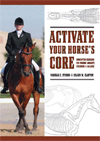
Hilary Clayton Equine Biomechanics Lecture in Pennsylvania September 24th
 ANNOUNCEMENT: Hilary M. Clayton, BVMS, PhD, MRCVS will be the speaker at the Dressage at Devon Forum in Devon, Pennsylvania on Wednesday, September 24, 2008. With her lecture The Bio-Mechanics of the Horse, participants will also be able to participate in one of Dr Clayton's lively question and answer discussion sessions.
The lecture, Fitness Training to Maximize Dressage Performance, will address the fitness requirements of dressage horses at different levels of training, including exercises that can be used to improve the horse’s fitness and strength in a highly sport-specific manner. Descriptions will include exercises performed from the ground,cross-training exercises and strength training exercises. Dr. Clayton will also discuss performance issues related to lack of strength or suppleness.
A graduate of the University of Glasgow, Dr. Clayton is a professor and the McPhail Dressage Chair in the Department of Large Animal Clinical Sciences at Michigan State University. She has focused her professional career on the study of the movement of horses, including gait analysis, lameness mechanics and the conditioning of sport horses. Dr. Clayton is also an accomplished equestrian with Bronze, Silver and Gold medals from the United States Dressage Federation.
Fitness Training to Maximize Dressage Performance will be held in the Devon Room at the 34th Annual Dressage at Devon Horse Show, on the Devon Horse Show Grounds in Devon, PA. The Forum will begin at 7:00 (doors open at 6:00 pm.). Tickets are $40 and a gourmet boxed dinner and soft drinks. There will also be a cash bar. For information or to purchase tickets, contact Anne Moss at 610-380-1518 or email annemoss@verizon.net.
Dressage at Devon is the highest rated international dressage competition and most complete breed show outside of Europe. Olympic medalist Robert Dover calls Dressage at Devon “the standard by which all American horse shows should be judged.” Dressage at Devon takes place at the Devon Horse Show Grounds, Route 30, in Devon, Pennsylvania, September 23rd through 28th. For more information on Dressage at Devon please visit
www.dressageatdevon.org.
Tuesday, August 19, 2008
Golden Horseshoes: Holland's Farrier in Hong Kong

He's going for the gold. Lift up one of Salinero's shoes and the entire country of The Netherlands would believe that they are made of gold.
In the next few hours, Anky Van Grunsven of Holland and Isabell Werth of Germany go for the gold medal for individual dressage at the Hong Kong Equestrian Games of the Beijing Olympics. The two women are separated by a few one-hundredths of a point...and years of tooth-and-nail competition and micro-point finishes. Or will a dark horse come up from the ranks to take first place?
Each of the top two horses is shod by one of the world's leading sport horse farriers, Rob Renirie for Holland and Dieter Krohnert for Germany.
Anky takes her own farrier to the Olympics with her, and he is also the official farrier for his country. Rob Renirie is a cool study in composure and has an analytical eye for the horse he loves, Salinero.
In Sydney in 2000, Rob ran out into the arena to grab the bridle of Bonfire, Anky's first gold-medal winner, when he exploded from all the controlled energy after his test. Rob studies the horse and knows the rider well.
Holland had to settle for second to Germany in the team medals, and missed the use of a top horse, Sunrise, who went lame. It is all coming down to this one ride, since Anky has announced that she may retire.
If you have a chance to go to a seminar with Rob Renirie about shoeing, go. The former jumper rider turned farrier has also studied equine biomechanics at the University of Utrecht and he has created a place for himself at the pinnacle of sport horse farriery by combining the expertise of a rider, a trainer, a scientist and a skilled farrier into one person.
If you missed his four-hour master class on sport horse shoeing at the Palm Beach laminitis conference last November, you really missed something.
Someone showed me a picture of Rob taken in Hong Kong last week. It was late at night. Pouring rain. Rob with his white head was unmistakably, crouched under an umbrella with Anky's groom, Willeke. They were watching Anky school in the middle of the night, when it might be a little bit cooler. The rain didn't matter. Rob's eyes were locked on the horse's hooves. He was willing them to turn gold.
Post script: Anky Van Grunsven of Holland won her third consecutive individual Olympic gold medal in dressage in Hong Kong.
Golden Horseshoes: German Farrier Shoes the Olympic Champions
 Dieter Krohnert, Official Farrier of the German Equestrian Teams
Since 1990, the German equestrian teams have not left home without him. And since 1990, they have won all the Olympic team gold medals in dressage.
Dieter is an enigmatic globe-trotter. If he sat down next to you on an airplane, you might think he was a spy. Or a race car driver. Or a hundred other things...but probably not a farrier. He is clever, inventive and thinks on his feet. Dieter pushes the envelope by narrowing his eyes and nodding, ever so slowly....and coming back from the anvil five minutes later with an answer to your problem cradled in his big hands.
Dieter brought my attention to spider-plate shoes and thumbprint heels and Luwex pads. A seminar for farriers he gave at Rochester Equine Clinic five (or so) years ago was exceptional.
Dieter's English is very good, although he is one of those people who tells you a lot if you pay as close attention to what he doesn't say. He is proud of his country and its horses and of his work.
Dieter has his own farrier clinic near Hamburg, Germany and also works with a vet clinic, so his lameness cases are as interesting as his sport horse tricks.
If they gave gold medals for farriery, Dieter's neck would be very tired from holding them all up.
Congratulations, Dieter, on Germany's three gold medals in these Olympics. One to go!
Monday, August 18, 2008
Objective "Lameness Locator" System Will Be Marketed by UMissouri Veterinarian
 Dr. Loni Taylor runs alongside a test horse. Three sensors are placed on the horse's head, the right front foot and the dorsum of the pelvis. The sensors measure the head acceleration, the pelvic acceleration and the right front leg angular velocity. By reading these measurements veterinarians will be able to determine whether or not a horse is lame before it shows any signs. (Story provided by University of Missouri)
In the equine veterinary industry, lameness in horses has been assessed subjectively for centuries, said Paul Schiltz, a veterinarian for Equine Medical Services in Columbia. Each vet has his or her own opinion about what's wrong with a horse - and they often disagree.
But Kevin Keegan, professor of veterinary medicine and surgery at MU, has a solution to this problem with the technology he has created that is going commercial in the next couple of weeks to months.
In the late 1990s, Keegan began working on the Lameness Locator with a simple goal: to develop an objective way of detecting lameness.
"Each practitioner says something different when observing, so we need a way to teach our students exactly what to look at," said Keegan, also director of the E. Paige Laurie Endowed Program in Equine Lameness at MU.
Through a lameness evaluation performed by multiple vets, he found, for example, that in looking at a horse's front legs, these vets agreed only 25 percent of the time.

Keegan then began observing horses on treadmills and putting markers on their bodies to record movements and transmit them to a computer. He attended MU engineering meetings and developed rules and equations to analyze the movements, pairing up with MU engineer professor P. Frank Pai, who has worked with airplane vibration evaluations.
The Lameness Locator is a spinoff of Pai's work with airplanes. The locator analyzes vibration damage to see where the horse's movement is off, Keegan said.
But the invention wasn't practical for other industry professionals. It was then that Keegan began collaborating with Yoshiharu Yonezawa, an electronics engineering professor from Japan, Keegan said.
Keegan and Yonezawa worked intensely on decreasing the size of the sensors and the number of other instruments and wires they put on the horses to record the movements, he said.
One of the first steps was to use fewer sensors. Their previous work showed they needed only four markers to determine the lameness: on the top of the head, the right front leg, the top of the pelvis and the right hind leg. A year ago, they stopped using the locator on the right hind leg because it was transmitting the same information received from the right front leg, Keegan said.
The equipment, now wireless, measures the acceleration of the head and pelvis and the angular velocity of the front leg. If they're sound, the data looks like a symmetrical sine wave, and if they're not, Keegan and Yonezawa measure the shape of the signal. A lame horse has a disruption in the shape, Keegan said. A frequency analysis, which pinpoints the location of the lameness, is performed.
With the Lameness Locator ready to go for a wider market, Keegan needed funding. He started a business called Equinosis and got a license. His company raised money from Angel Investors in Columbia, and production will begin in the coming months with 100 units this year for vets across the country, Keegan said. A price has not yet been set.
"I've been impressed," said Schiltz. "It's a new approach to a very old problem. Depending on the price, I don't know any lameness clinic that wouldn't want one."
Schiltz said it will benefit vets when they're observing subtle lameness that isn't visible by simply looking at the horses. He said that because lameness is a specialty in equine vets, another big advantage is that vets who don't look at lameness every day could have a way to evaluate the horses without relying solely on their experience. It would also be a great teaching tool, Schiltz said.
Tom DiSalvo, co-owner of the thoroughbred racehorse American Thunder, didn't know about the Lameness Locator before bringing his horse to the MU Equine Clinic from Illinois, and he is impressed.

It will also help vets locate multiple problems that might have been overshadowed by an obvious lameness in another area, Schiltz said. All of the lameness will be shown at the same time, he said.
"It would be useful for any vet practice that deals with lameness, but the limiting factor will be the cost of the equipment," Schiltz said. "I think it's such an applicable program that I would be able to justify buying it even if it's not cheap."
Thursday, August 14, 2008
Shoeing for the USA": Todd Meister
 (photo courtesy of Chespeake Dressage)
Todd Meister is one of those special guys. He calls himself a farrier, but as he told me once, "I'm a farrier who keeps his veterinary license up to date". Lest you think he is a vet who talks hooves and then leaves a prescription, think again: Todd is a certified as a journeymay farrier by the American Farrier's Association. He specializes in event horses and I've watched him work with team vet Brendan Furlong at the Rolex Kentucky Three-Day Event.
For the past ten years or so, Todd has been partnering with Steve Teichman and Vance Glenn in running one of the USA's most successful group farrier practices, Chester County Farrier Associates in Kennett Square, Pennsylvania.
He is a 1995 graduate of the University of Pennsylvania's College of Veterinary Medicine. His wife Missy is a veterinarian as well, but she doesn't shoe horses.
"My Shoes Are There!" Meet England's Nigel Turner
 Life goes on at home for Nigel Turner but his shoes are going for the gold on the hooves of Tim Stockdale's "Ruby".
Farrier Nigel Turner is the regular farrier for British show jumper Tim Stockdale and his stunning gray mare, Fresh Direct Corlato (stable name: Ruby). Watch for them as the show jumping gets underway. Actually, you can't miss them; the cameras will love this horse. And as she sails over those jumps, she'll be flashing the shoes that Nigel prepared for her
Nigel, who lives near Milton Keynes in Buckinghamshire, England, has been shoeing for Stockdale for about five years. Tim and Ruby have been together for seven years, although she has been out of the limelight and the headlines for a while. The mare suffered a terrible fall while showing in Portugal two years ago but has made a dramatic comeback.
In the newspaper interview, Stockdale said, "At the end of the day having a good team is an integral part of this and with the feet of the horse you can't take any chances," he said. "You have got to have people that are the best at what they do."
Read a local newspaper article about Nigel here.
Wednesday, August 13, 2008
Press Release: Mustad announces six scholarship recipients
(received via press release from Alex Cook at Lilja Inc., posted as received)
FOREST LAKE, Minn. – (August 13, 2008) – Mustad Hoofcare Center announced today the six recipients of its scholarship essay contest for farrier students. Recipients were given a $750 scholarship to help offset the costs of their farrier education.
Participants wrote original essays on “Benefits of Keeping Horses Shod. ” Essays were judged in three categories:
1) overall best presentation;
2) most suitable for educating horse owners on hoofcare and protection; and
3) best description of the importance of shoeing, or “For the Better of the Horse.”
The recipients of the 2008 Mustad Scholarships are:
Alyssa Clermont Nakusp, British Columbia
Adam Zepf Cold Spring, Ky.
Jacob Wade Quaker City, Ohio;
David Marshall Tompkinsville, Ky.
Gordon Norris Morrison, Colo.
Charlotte Ruse Cloverdale, British Columbia
“Education is a cornerstone value in our mission as a company. Mustad is proud to be supporting the next generation of skilled farriers,” said Carlos Xifra, president of Mustad Hoofcare Center. “We believe that a strong farrier education is critical to ensure the best possible care – for the better of the horse.”
Funds for the scholarships were raised at the 2008 AFA Convention in Lexington, Ky. Mustad, together with Anvil Brand Shoe Co., hosted Farrier Appreciation Night for 400 farrier and industry guests. Mustad matched the funds raised that evening through raffle ticket sales to AFA members; GE Forge & Tool also donated $1,000 to the scholarship pool, bringing the evening’s total to $4,500.
About the scholarship winners
Alyssa Clermont currently attends the Advanced Farrier Program at Olds College in Olds, Alberta, and works as a farrier apprentice in Saskatoon. She trains horses for barrel racing and speed events, and also enjoys photography. Clermont chose the farrier profession because she is interested in equine health “and I believe you have to start from the ground up to have a healthy horse,” she said.
Adam Zepf is currently a farrier apprentice in Cincinnati, Ohio. Zepf grew up around horses and frequently found himself by the farrier’s side. After researching a career as a farrier, “the prospect of the forging and shoe building really caught my eye and interested me more,” he said.
Jacob Wade recently graduated from Kentucky Horseshoeing School. Wade has always been interested in equine hoofcare. While working for a company that trains reining horses, he was introduced to a farrier who got him interested in a career as a farrier. “My future plans are to become a Certified Journeyman Farrier and to own my own productive shoeing business,” said Wade.
David Marshall has loved horses since he was a child, but only recently had the privilege of owning one. Being a horse owner has given Marshall a new perspective on the importance of farriers and their vital role in the equine industry. David is a veteran of the Iraq War, an avid outdoorsman, NASCAR fan, golfer and a horseshoe player.
Gordon Norris currently attends Colorado State University in Fort Collins, Colo. He was involved in high school and college rodeos. Norris had always been interested in hoofcare and learned more about being a farrier after befriending the farrier who tended to his family’s horses. “I realized right away this was an ancient craft, a brotherhood that has bonded man and beast for centuries,” he said. Norris enjoys camping and trail riding with his young family, and is an avid outdoorsman.
Charlotte Ruse is a recent graduate of the Farrier Program at Kwantlen Polytechnic University in Cloverdale, British Columbia. After working at a stable, she learned about all aspects of equine care – from stable maintenance to grooming to training – and fell in love with caring for horses. Ruse was particularly interested in learning more about how the farriers worked. “I want to use my knowledge to help other horse owners and anyone in this industry to give horses the best possible care,” she said. She enjoys riding her own horses and participating in dressage and English horse events.
(end press release)
Blogger's note: You'll find lots of information about Mustad and the company's products at www.mustadinc.com.
FOREST LAKE, Minn. – (August 13, 2008) – Mustad Hoofcare Center announced today the six recipients of its scholarship essay contest for farrier students. Recipients were given a $750 scholarship to help offset the costs of their farrier education.
Participants wrote original essays on “Benefits of Keeping Horses Shod. ” Essays were judged in three categories:
1) overall best presentation;
2) most suitable for educating horse owners on hoofcare and protection; and
3) best description of the importance of shoeing, or “For the Better of the Horse.”
The recipients of the 2008 Mustad Scholarships are:
Alyssa Clermont Nakusp, British Columbia
Adam Zepf Cold Spring, Ky.
Jacob Wade Quaker City, Ohio;
David Marshall Tompkinsville, Ky.
Gordon Norris Morrison, Colo.
Charlotte Ruse Cloverdale, British Columbia
“Education is a cornerstone value in our mission as a company. Mustad is proud to be supporting the next generation of skilled farriers,” said Carlos Xifra, president of Mustad Hoofcare Center. “We believe that a strong farrier education is critical to ensure the best possible care – for the better of the horse.”
Funds for the scholarships were raised at the 2008 AFA Convention in Lexington, Ky. Mustad, together with Anvil Brand Shoe Co., hosted Farrier Appreciation Night for 400 farrier and industry guests. Mustad matched the funds raised that evening through raffle ticket sales to AFA members; GE Forge & Tool also donated $1,000 to the scholarship pool, bringing the evening’s total to $4,500.
About the scholarship winners
Alyssa Clermont currently attends the Advanced Farrier Program at Olds College in Olds, Alberta, and works as a farrier apprentice in Saskatoon. She trains horses for barrel racing and speed events, and also enjoys photography. Clermont chose the farrier profession because she is interested in equine health “and I believe you have to start from the ground up to have a healthy horse,” she said.
Adam Zepf is currently a farrier apprentice in Cincinnati, Ohio. Zepf grew up around horses and frequently found himself by the farrier’s side. After researching a career as a farrier, “the prospect of the forging and shoe building really caught my eye and interested me more,” he said.
Jacob Wade recently graduated from Kentucky Horseshoeing School. Wade has always been interested in equine hoofcare. While working for a company that trains reining horses, he was introduced to a farrier who got him interested in a career as a farrier. “My future plans are to become a Certified Journeyman Farrier and to own my own productive shoeing business,” said Wade.
David Marshall has loved horses since he was a child, but only recently had the privilege of owning one. Being a horse owner has given Marshall a new perspective on the importance of farriers and their vital role in the equine industry. David is a veteran of the Iraq War, an avid outdoorsman, NASCAR fan, golfer and a horseshoe player.
Gordon Norris currently attends Colorado State University in Fort Collins, Colo. He was involved in high school and college rodeos. Norris had always been interested in hoofcare and learned more about being a farrier after befriending the farrier who tended to his family’s horses. “I realized right away this was an ancient craft, a brotherhood that has bonded man and beast for centuries,” he said. Norris enjoys camping and trail riding with his young family, and is an avid outdoorsman.
Charlotte Ruse is a recent graduate of the Farrier Program at Kwantlen Polytechnic University in Cloverdale, British Columbia. After working at a stable, she learned about all aspects of equine care – from stable maintenance to grooming to training – and fell in love with caring for horses. Ruse was particularly interested in learning more about how the farriers worked. “I want to use my knowledge to help other horse owners and anyone in this industry to give horses the best possible care,” she said. She enjoys riding her own horses and participating in dressage and English horse events.
(end press release)
Blogger's note: You'll find lots of information about Mustad and the company's products at www.mustadinc.com.
Subscribe to:
Posts (Atom)