Tuesday, September 23, 2008

Belknap's Laminitis Paper Wins Scientific Publishing Award


(University news release)

Dr. James Belknap, associate professor of equine surgery in the Department of Veterinary Clinical Sciences at the Ohio State University College of Veterinary Medicine, has been awarded the annual Equine Veterinary Journal Open Award for 2007 for his work as senior author of a paper published in the Equine Veterinary Journal. The Open Award is funded by the British Equine Veterinary Association (BEVA) Trust and presented to the senior author in recognition of a paper considered by the judges to be of outstanding excellence.

The paper, "Lamellar pro-inflammatory cytokine expression patterns in laminitis at the developmental stage and at the onset of lameness innate vs. adaptive immune response," focused on inflammation of the laminae, which they recognized as present in early forms of laminitis.

"No matter what type of laminitis, inflammation is playing a large role in the developmental process," Dr. Belknap said. "Researchers used to believe that inflammation was not a major component of the disease, and that the disease was mainly caused by a decrease in blood flow."

Dr. Belknap said discovering that inflammation plays a key role in the developmental stages of the disease has caused a paradigm shift in the way the disease is researched worldwide. This opens up new opportunities for discovery of novel treatments for this disease, which commonly results in crippling lameness of affected horses.

"We still have a long way to go to answer the big questions," he explained. "We still must determine which specific pathologic will eventually allow us to formulate an effective therapeutic regimen for this devastating disease."

Dr. Belknap received his veterinary degree from Colorado State University and has worked at Ohio State for four years as a surgeon; he has a special interest in equine podiatry. He grew up in Kentucky on a farm where he developed an early interest in horses.

© Fran Jurga and Hoofcare Publishing. No use without permission. All images and text protected to full extent of law. Fran Jurga's Hoof Blog is a between-issues news service for subscribers to Hoofcare and Lameness Journal. This blog may be read online or received via a daily email through an automated delivery service. To subscribe to Hoofcare and Lameness, please visit our main site, www.hoofcare.com, where many educational products and media related to equine lameness and hoof science can be found.

This post originally appeared at http://www.hoofcare.blogspot.com on September 23, 2008.

Monday, September 22, 2008

Aboriginal Brumby Walkabout: Pollitt and Hampson Back from the Outback

Professor Pollitt has been chasing wild horses in the Australian Outback. His studies are comparing the hooves of wild horse herds in different regions, with different environmental influences and breed/origin characteristics.

"We spent two weeks hiding at water holes, on mountain ridges, and walking through the desert photographing and filming horses and other wildlife including camels, dingos and emus..."

So begins the latest chapter in the literally "wild" annals of The Australian Brumby Research Team at the University of Queensland. The intrepid team is lead by Dr. Chris Pollitt and PhD candidate in hoof studies, Brian Hampson, and is attached to the famed Australian Equine Lamnitis Research Unit.

The researchers continue to trek out to the most remote areas in the huge country of Australia. Their goal is to find herds of horses that are surviving without human intervention. Over the past few months, this meant a wilderness expedition into Aborigine territory in the sparsely populated zone known as Central Australia. It's outback of Everywhere.

Many people, especially Americans, are not aware that Australia has, by far, the largest feral horse population in the world, and the most vast area of country for horses to run. Even more interesting is that the wild horses co-habitate with feral camels.

A "feral" horse, by the way, is a horse running wild that is descended from domesticated horse that were turned loose or that escaped from ranches or military units. The only true "wild" horses left on the planet are the Przewalski horses, most of whom live in zoos. In colorful Aussie lingo, a "Brumby" is a feral horse running wild Down Under. You may remember the dazzling brumbies of the film Man from Snowy River. If you don't, you can watch a clip of it that was posted on this blog last April by clicking here. If you have never seen that film, rent it!

The Australian Equine Genetics Research Unit at The University of Queensland is collaborating with the wild horse unit to test the DNA of different groups of wild horses in the studies. The aim is to find out what breed or breeds have been the most influential over isolated groups; this should make studying the feet more valid. For instance, a mountain group might be heavily Arabian, a desert group might have more Thoroughbred influence, or there may be a surprise breed, such as drafts or ponies, that crops up in the DNA.

Brian Hampson writes of the latest research trip: "The traditional land owners, the Urkaka people, allowed us to perform our study on their land. This is predominantly sandhill desert country with rocky valley systems 50km long and 5km wide on the edge. Our three Aboriginal guides took us through the valley system, where few white people (have) had access, to show us a permanent spring which was the only water for 30km.

"The horse and camel pads into the spring were like highways from the helicopter. We saw hundreds of horses and camels and got up very close to them at water holes. We darted and applied GPS collars to six horses and retrieved four collars after one week. One horse was more than 50km away from water on the last two days and couldn't be found. The other stallion couldn't be redarted at this time. I will be back out there later in September to do some more work on the desert horses and collect the other two collars.

"The sandy desert horses have long feet but not broken away. They scrape their toe through in swing phase in the deep sand and some square off the toe. The rocky desert horses have a short wall with a smooth bevel all the way round.

"The places these horses go, what they eat and how often they drink will amaze most people. Mares with foals are poor but stallions and loan colts are good to fat condition. The country is baron desert around water holes and horses have to walk out 10-15 km before finding any feed."

Hoofcare and Lameness has been involved in cheering on the efforts of the Brumby team because the wild horse has not been well-documented in the annals of natural history. I hope you will visit the unit's web site and consider donating to this important project. Click here to go to the sponsorship page and learn more about getting involved with this project. You can help, even if you live half a world away!

Congratulations to Greg Giles and his company, Cavallo "Simple Boots", for joining the sponsor list for the Brumby research, along with the Footloose Syndicate, a trio of private citizens who will be assisting on future research expeditions.

An unidentified Brumby foot from one of the desert herds. Hampson noted differences in hoof morphology between rocky desert and sandy desert hooves. This is possibly a rocky desert hoof, judging by his description.


© Fran Jurga, Hoofcare Publishing and the Australian Brumby Research Unit. No use without permission.

Fran Jurga's Hoof Blog is a between-issues news service for subscribers to Hoofcare and Lameness Journal. This blog may be read online at www.hoofcare.blogspot.com or received via a daily email through an automated delivery service. This post was originally published on 22 September 2008.

To subscribe to Hoofcare and Lameness, please visit our main site, www.hoofcare.com, where many educational products and media related to equine lameness and hoof science can be found.

Friday, September 19, 2008

Lame Brains Unite: Hilary Clayton Gait Study Course Opened to Public

This horse is outfitted for a session of gait analysis in the McPhail Center's world-class video gait analysis laboratory. Equipment at the Center includes a Motion Analysis system, AMTI force plate, Noraxon EMG system, Pliance saddle pressure pad and other custom equipment for making measurements of horses and riders.

Every September, we get the feeling we should be learning something new. Starting back to school. Taking a new interest in our profession. Moving forward with the times.

But we've never had an opportunity like this before.

A private course in equine lameness has been scheduled for next month at Michigan State University's McPhail Center for Equine Performance. The decision was made yesterday to open the course to the public, so this is the first and perhaps only announcement that interested professionals and horse owners may register for a hands-on course in equine gaits and lameness identification with world expert Dr. Hilary Clayton.

The course is offered by the innovative international program Equinology, which offers courses on biomechanics with Dr Clayton and other experts all over the world. The program is designed as a professional development track for those seeking a career in equine body work, rehabilitation, etc. but sometimes courses are open to non-program participants.

Here's a brief description:

Course Title: Biomechanics, Applied Anatomy and Gait Abnormalities (Course # EQ 300)
Course Dates: 10/20/2008 to 10/23/2008

This 4-day course offers both classroom and hands-on approaches. This is an actual course, not a workshop. The goal is for you to learn to recognize irregularities and gait abnormalities. Live and filmed horses, some with diagnosed problems, will be presented for inspection.

Understanding gait diagramming and where the limbs are placed throughout individual gaits enables you to visualize which joints, ligaments, tendons and muscles are utilized for the movements. This course does not attempt to replace veterinary expertise; however it will teach you better assessment skills. Surface anatomy and palpation of joints, tendons and ligaments are also included.

Course topics include:
Gait analysis and evaluation guidelines
Conformation evaluation
Locating palpation points
Causes and symptoms of the lame horse
Subjective analysis of conformation: Limb deviations, rotations and determination of symmetry
Basic anatomy and terminology
Preventing lameness
Defining and diagramming the basic gaits
History of biomechanics
Biomechanical techniques
High Speed Cinematography
Equipometry discussion
Measuring horses
Stay Apparatus: structure, function and palpation of the forelimb
Reciprocal and Stay Apparatus: structure, function and palpation of the hindlimb
Structure and function of the head and neck
Sports analysis/video presentations & problem solving for various disciplines

Prerequisites: A good knowledge of veterinary vocabulary, equine anatomy and horse handling skills; you will be expected to have read Dr Clayton's book, The Dynamic Horse.

Tuition: $995 for four days.

Note: Equinology and Dr Clayton will also offer this course at Writtle College in Essex, England in January 2009.

About the center: The Mary Anne McPhail Equine Performance Center is a state-of-the art equine sports and lameness facility housed in its own mini-campus with dedicated indoor arena, stabling and laboratories at the Michigan State University College of Veterinary Medicine in East Lansing, Michigan. Since the center opened in the year 2000, some of the world's leading research in equine sports medicine and biomechanics, culminating in world-renowned research to benefit performance and soundness of equine athletes, has been conducted at the center. Veterinarians and researchers from all over the world travel to the McPhail Center for consultation and collaboration.

About Dr Clayton: Dr. Clayton has been the first incumbent of the Mary Anne McPhail Dressage Chair in Equine Sports Medicine at Michigan State University's College of Veterinary Medicine since July, 1997. As a veterinarian and researcher, Dr. Clayton's studies on the biomechanics of equine gait have focused on sport horses, including dressage and jumping horses. Her work has included videographic analytic studies of Olympic dressage and jumping events and kinematic and kinetic research with some of the world's top dressage riders and horses in the Netherlands. She has a special interest in the foot and has contributed greatly to the body of knowledge on the role of the foot in locomotion and its functional anatomy. A lifelong rider, Dr. Clayton is a USDF Bronze, Silver and Gold Medalist, and is a certified equestrian coach in the UK and Canada. She is the author of several books including Conditioning Sport Horses, The Dynamic Horse, Clinical Anatomy of the Horse, and Activate Your Horse's Core. She is co-author of the textbook, Equine Locomotion, and is a longstanding consulting editor with Hoofcare and Lameness Journal, which also sells her publications.

To learn more, visit equinology.com or to register, use the online system. If you have questions, contact Debranne Pattillo, President of Equinology, in Gualala, California: tel 707 884-9963 or email office@equinology.com. Please mention that you read about the course on this blog and that you are inquiring about course EQ300.

© Fran Jurga and Hoofcare Publishing. No use without permission. All images and text property of the McPhail Center and/or Hoofcare Publishing and protected to full extent of law.

Fran Jurga's Hoof Blog is a between-issues news service for subscribers to Hoofcare and Lameness Journal. This blog may be read online or received via a daily email through an automated delivery service.
To subscribe to or learn more about Hoofcare and Lameness, please visit our main site, www.hoofcare.com, where many educational products and media related to equine lameness and hoof science can be found.

Thursday, September 18, 2008

Favorite Photos: Coffin Joint Pressure Test

Yesterday, I announced on this blog that we had a few copies of the Proceedings and Summary Book + CD-ROM of the 4th International Equine Conference on Laminitis and Diseases of the Foot.

Today, the shelf is almost empty. Thanks to everyone who has helped support the conference with their purchase.

The book is filled with the "greatest hits" images from the speakers' slides, if they were able to provide high enough resolution files.

This one was a big hit with me. It was taken at Rood and Riddle Equine Hospital's Podiatry Center, by Dr. Scott Morrison. Regional perfusion of the distal interphalangeal (coffin) joint is pretty routine there but he just happened to have his camera aimed at the foot and it was set on a fast shutter speed. It caught the spurt of fluid exiting the joint in mid-air.

If you double click on the image, you can see it at full size (on most computers, using most browsers).

But don't even think of right-clicking on it. This image is the property of Dr. Scott Morrison and is protected under international copyright by both the Laminitis Conference and Hoofcare Publishing.

But it is a great shot, don't you agree?

Click here for information about ordering the summary book and/or proceedings CD-ROM or just scroll down to Wednesday's post. Don't wait too long!

© Fran Jurga and Hoofcare Publishing. No use without permission. Fran Jurga's Hoof Blog is a between-issues news service for subscribers to Hoofcare and Lameness Journal. Please visit our main site, www.hoofcare.com, where many educational products and media related to equine lameness and hoof science can be found.

Friends at Work: Elizabeth Decker in the Bluegrass


Click on the screen to watch a slide show of farrier Elizabeth Decker at work; photos by and thanks to Gene Manley of Manley Farm. Slide show is mirrored from Gene's photo set at Flickr.com. Read more below.
Kentucky horse farm owner Gene Manley likes to take photos. He's a man who studies things--flowers, fencelines, his horses, his family--through the lens of his camera. The results are lovely, but when he turned his camera on his farrier last month, he didn't expect that he'd be sharing the photos with the world...but he wasn't counting on Hoofcare & Lameness stumbling on them, either.

Manley Farm outside Lexington is fortunate to have an energetic and hard-working farrier at their service: Elizabeth Decker.

Elizabeth Decker is a great role model for farriers everywhere. A few years ago, she set out to build a farrier business for herself in one of the country's toughest markets. There's lots of competition in Lexington, Kentucky; sure, there are a lot of horses, but there are also surely a lot of mega-farrier businesses and small herds of apprentices following around the Great Ones, not to mention world-class referral experts like Dr. Ric Redden and the stable of vet/farrier pros at Rood and Riddle Equine Hospital's Podiatry Clinic.

Around Lexington, you never know who will pick up a foot you worked on and have a look. On the other hand, it's a good place to find top-shelf advice, and surgery or hoof repair expertise is just a quick horse van ride away.

Elizabeth earned her chaps with an apprenticeship under the detail-driven eye of sport horse specialist Victor Camp and worked toward her goal of an independent practice. Along the way, she picked up some special cases at the Kentucky Horse Park and began mentoring equine science students at Midway College as the farrier appreciation instructor.

Now she's well on her way and it's been a pleasure to watch her progress. She's subscribed to Hoofcare & Lameness since farrier school, and has even had her father call to order books for her for Christmas. And she doesn't just buy books, she reads them.

Note: these photos are not in order, but you are basically seeing Elizabeth prepare two front shoes, hot fit them, and begin to nail them onto one of Gene Manley's horses. As with all farriers, her job is made more pleasant or more challenging (it all depends...) by the presence of an audience.

Elizabeth can handle it; it's all in a day's work in the Bluegrass!

© Fran Jurga and Hoofcare Publishing. No use without permission. All images and text protected to full extent of law. F

Wednesday, September 17, 2008

Bill Moyer Named AAEP Vice President

William ("Bill") Moyer, DVM will be the 2009 vice president of the American Association of Equine Practitioners. Dr. Moyer, of College Station, Texas, will join the Executive Committee next year and then serve as AAEP president in 2011.

Moyer is currently professor of sports medicine and head of the Department of Large Animal Clinical Sciences of the Texas A&M College of Veterinary Medicine and Biomedical Sciences. He began his career at Texas A&M in 1993 following more than two decades on faculty at the University of Pennsylvania School of Veterinary Medicine. While at Penn, Moyer held numerous positions, including director of the Equine Outpatient Clinic and professor of sports medicine.

Recognized for his expertise in equine lameness, Moyer has authored or co-authored several books, including the bestselling A Guide to Equine Joint Injection and Regional Anesthesia and the now out-0f-print A Guide to Equine Hoof Wall Repair, co-authored with farrier Rob Sigafoos. His research also has appeared in numerous refereed journals and he has been an invited speaker at continuing education meetings worldwide.

Dr. Moyer is a 1970 graduate of the Colorado State University College of Veterinary Medicine.

Research and commentary by Dr Moyer has been a mainstay of Hoofcare and Lameness Journal since its first issue in 1985, when he agreed to serve on the editorial board. Dr. Moyer's Guide to Equine Joint Injection and Regional Anesthesia is the bestselling book technical book ever sold by Hoofcare Publishing; the revised and expanded 2007 edition is now in its second printing.

Dr. Moyer always credits the late New Bolton Center Jack Anderson as an influential mentor in the development of his study of foot-related lameness in horses. Anderson's anvil is enshrined as a monument on the lawn at New Bolton.

© Fran Jurga and Hoofcare Publishing. No use without permission. Fran Jurga's Hoof Blog is a between-issues news service for subscribers to Hoofcare and Lameness Journal. This post originally appeared on 17 September 2007 at www.hoofcare.blogspot.com.

Tuesday, September 16, 2008

Who's the Happiest Man in Italy This Week?

World Champion Mirko Piazzi (blue shirt) of the Italian team with his groom Samantha (far right) and the farriers working at the FEI World Reining Championships at the La Palasturla facility in Manerbio, Italy. I wish I knew their names!

Italy has long been knocking on the door of international reining competitions, and the Italian team burst through in great style this week when they won the FEI World Reining Championship.

At the FEI level, tough medication testing kicks in for reiners, and the role of the farrier becomes more important than ever. In the world of horseshoes, Italy is also a rising-star country with the dazzling array of aluminum shoes for reiners and sport horses manufactured by Colleoni there. Endurance is another sport where Italy is providing innovation matched by successful scores.

More insight may be offered in December, when Italian vet/farrier Hans Castilijns from Tuscany speaks at the American Association of Equine Practitioners. Hans's lecture will be a "don't miss" highlight of the farrier conference there. Watch this blog for more information on the AAEP's vast offerings on lameness and hoofcare at this convention, which will be held in San Diego, California. (See you there.)

Teams from Belgium, Canada, the Czech Republic, France, Germany, Great Britain, Italy, Switzerland, The Netherlands and the U.S.A. competed in Italy this weekend along with individual riders from Australia, Austria, Poland, the Russian Federation, South Africa, Sweden and the Dominican Republic.

Team USA took the silver medal with 663.5 points closely followed by Team Germany. Sylvia Rzepka, riding for Germany aboard Doctor Zip Nic, earned the highest score of the day, a 227.5.

The celebration continues on Mirko's blog if you want to congratulate him or share in the fun.

Who ever would have thought that a western riding sport would turn into an international event? Probably no one; it just happened. And it's great fun to watch the international aspects of this sport grow; a victory like this will surely only broaden the sport's appeal more!

Sunday, September 14, 2008

Friends in Need: Ribbons for Linda

Linda Best in healthier times, showing one of her Miniature Horses.

Once upon a time, there was a little girl with a big heart and some big plans to help her friend. And it worked.

Today was a special day. A little girl named Michaela put on a horse show today, with some help from a lot of bigger people. She wanted to help the woman who got her involved in showing. And she knew the woman needed her help.

The horse world turned out today to help Linda Best, a farrier from New Hampshire who is battling pancreatic cancer without the benefit of insurance. Linda is also trying to keep up her half of the shoeing business that she runs with her husband, Paul. She's also trying to run her farm. She's also trying to home-school her children. Do you get the picture?

But today, she was the guest of honor at a horse show to raise funds for her healthcare. All planned by a little girl who believes that Linda needs and deserves help.

The horse world responded in a big way. The show was helped with a lot of free publicity from the local media, and a lot of sympathy and affection for Linda.

If you'd like to help Linda, you can read about the horse show here.

There is a PayPal donation button at the bottom of that page if you want to forward a donation electronically to Linda's fund at the bank.

You could also send a check to:
Ribbons for Linda Best
c/o Kennebunk Savings Bank
P.O. Box 1880
Ogunquit, ME 03907

UPDATE: A fund-raising auction to benefit Linda will be held this Saturday at the open house at Horseshoes Plus farrier supply company in Barrington, New Hampshire. Farriers have made and donated hand-crafted artwork for the auction. Call 800-382-5434 for details.

Linda has been shoeing horses around here and in New Hampshire since she was 19 years old. She and Paul first subscribed to Hoofcare and Lameness in 1987. They have a unique business, since both of them are farriers. I am sure that Linda hasn't asked for this help, and no one asked me to ask you to help.

Sometimes, you just know what to do. I hope you will, too.

© Fran Jurga and Hoofcare Publishing.

Fran Jurga's Hoof Blog is a between-issues news service for subscribers to Hoofcare and Lameness Journal. This blog may be read online or received via a daily email through an automated delivery service.

To subscribe to Hoofcare and Lameness, please visit our main site, www.hoofcare.com, where many educational products and media related to equine lameness and hoof science can be found.

Send email to blog@hoofcare.com.

Friday, September 12, 2008

Farrier Art: Thelwell's First Cartoon Will Be Auctioned in England This Month

"Ow do they feel then?"

Around any barn, anywhere (just about) in the world, you can describe a pony as "a real Thelwell type" and, immediately, whomever you are talking to knows exactly what you mean. They can "see" that pony. Round in the belly, overgrown in mane and forelock, a bushy tail, and a little short-legged, tweedy girl perched atop a flat saddle: there's your basic Thelwell syndrome.

Oh, and both the child and the pony usually exhibit some attitude.

Thelwell cartoons have made us laugh and nod our heads for generations. They are too true, a keen observation on the slightly mad, slightly wonderful world of little kids and ponies. We know those kids. We know those ponies. And we love Thelwell for capturing them for us.

But did you know that the very first Thelwell cartoon featured a farrier? Sketched in 1952, it showed fictional farrier Joe Clark sending the little girl on her way from the forge with new shoes on her pony's feet. Thelwell's cartoons were published in the British magazine Punch, which was of the New Yorker genre of literary publications liberally peppered with humorous cartoons and artwork.

The original of this most important first cartoon was lost for many years, and only re-surfaced after Thelwell's death. A lady came forward who said it had been hanging in her living room for many years and had been bought in a shop in the Cotswolds. She has now arranged to have it auctioned off in Cheshire at the end of this month.

If you love ponies and farriers, here's your chance to own a piece of history. The drawing is expected to perhaps bring as much as 3,000 pounds (approximately $6000 US).

And if you need somewhere to hang it, I have just the place.

Meanwhile, I'll keep scouring the shops and flea markets, knowing that things like this really are out there...if you know what you're looking for and find it first.

Visit the web site of Wright Manley auctioneers in Beeston, Cheshire, England for details of the auction on September 25.

Wednesday, September 10, 2008

Riding for Real: Snapshot from the Paralympics Equestrian Games in Hong Kong

Link
Bettina Eistel of Germany won the bronze medal in division III at the Paralympics in Hong Kong this week. She was born without arms. Notice both sets of reins.

View a gallery of photos from the Games, from which this one was selected, on Yahoo.com's horse racing channel. Great Britain won team gold with three out of four riders scoring over 70! The USA finished 10th.

I hope the Paralympics will earn a lot of good press this week and help restore some good will to equestrian sports after the embarrassment of the drug test violations in horses competing at the "real" Olympics.

Maybe the Paralympics is the real Olympics. It certainly embodies the spirit of what the Games are supposed to represent, perhaps much more than professional riders are capable to pretending to convey.

Sunday, September 07, 2008

Save the Date: Cornell Vet School Hosts 25th Annual Farrier Conference in November

(Double click on image to enlarge and/or print it.)

Conference announcements are being mailed this week for the 25th Annual Farriers Conference at Cornell University College of Veterinary Medicine, to be held November 8-9, 2008 in Ithaca, New York. The mailing was sent to all Hoofcare and Lameness Journal subscribers in the Northeastern USA, among others! If you don't receive the mailing or would like to know more about the conference, the information will be posted on the vet school web site at this link: http://www.vet.cornell.edu/education/ConEd.htm.

Cornell's conference is annually one of the premier events on the farrier education calendar. Led by Michael Wildenstein FWCF (Hons), who is now adjunct professor of farrier science at Cornell, the conference attracts farriers from around the country and Mike continually brings fine speakers from all over the world to share their work with attendees.

This year includes two British farrier instructors, Mark Caldwell and Neil Madden, who are both deep into advanced studies of hoof shape, hoof balance, and hoof mechanics, as well as the ever-personable American draft horse specialist Bruce Matthews of Vermont, who has developed a program for teaching horses to stand (safely) while being trimmed or shod.

Among the Caldwell/Madden presentations will be a tech-based demonstration comparing high-speed video with pressure-mat results in evaluating hoof landing and weightbearing, and a session on hoofmapping by British parameters. Sunday's entire program will be given over to Caldwell and Madden to present their work on static vs dynamic hoof balance in a lecture/PowerPoint format.

After a fabulous full course dinner on Saturday, Dr. Lowe will reminisce about the first farrier conference at Cornell, and veteran farrier and horseman Steve Kraus will lecture on conformation faults and how they affect performance horses.
.
I look forward to this event so much every year, both for the high quality of the speakers and the chance to snoop around the Cornell vet school library. It is also special because of the people who attend--many of them never miss a year. Over the past 25 years, the group has seen the finest vet and farrier speakers on the hoof stride onto that stage; I believe the repeat attendees must be among the best-educated farriers in the world. Anyone who is asked to speak at this conference should be honored...and had better show up prepared to answer excellent questions and talk late into the night. It's a great group of people...and this conference supplies wonderful food, as well!

Note: hotel rooms can be a problem, especially if Cornell has a football game that weekend. Book early! Most people stay at the Best Western University Inn, which is the closest to the vet school. Call 607 272 6100 and ask for the farrier conference rate.

Ithaca is served by major airlines like Northwest, US Air, and United. Check flyithaca.com for fares and details. Another (somewhat) nearby airport is Syracuse, New York. New York City would be a few hours' drive. Ithaca is right in the middle of the state.

For more information, or to inquire about sponsorship or space in the trade show, call Amanda Mott in the vet school's continuing education department at 607.253.3200 or email her: amm36@cornell.edu. Amanda has been on (much-deserved) vacation and I'm not sure exactly when she will be back.

If for some reason you need the brochure and cannot reach Amanda, email Hoofcare and we will forward the PDF file to you as an email attachment.

Hoofcare and Lameness is proud to be associated with this event.

Be Awed. Be Inspired. Check out the Paralympics and Find Out Why Paul McCartney Cheers On Amazing Athletes (and Their Horses) with a Song


The Olympics aren't over yet. Right now, in Hong Kong, some of the world's most courageous and gifted equestrians are competing in the Paralympic Equestrian Games, while other sports compete in the now-familiar venues in Beijing.

Limited to dressage, the competition is divided according to levels of disability, but includes both a set test and a freestyle. Horses and riders have flown to Hong Kong from all over the world to compete.

This amazing sector of equestrian sport caught the eye of Sir Paul McCarthney when he met British Paralympian Sophie Christenson, who rides in spite of her lifelong battle with muscular dystrophy. He was so impressed with her amazing ability that he loaned a song to the British Paralympian effort. It's the first time a Beatles or McCartney song has been used commercially.

Some may have seen the short version of this video, but watch this one. And then learn more about Paralympics, and riding for the disabled in general. You may be amazed at your reaction; imagine what you could do to help these athletes.

Click here to go the official Paralympics Equestrian Games web site.

Click here to meet the USA team, which is currently in tenth place in Hong Kong.

This could be the best thing you do for yourself all week.


All HoofBlog text and images © Hoofcare Publishing 2008 unless otherwise noted.

To learn more about new research, products, and treatments for the horse's hooves and legs as reported to veterinarians and farriers in the award-winning "Hoofcare & Lameness Journal", 
go to http://www.hoofcare.com

Direct “subscribe now” link to Hoofcare & Lameness Journal: http://www.hoofcare.com/subscribe.html

Contact Hoofcare Publishing anytime: 
tel 978 281 3222 fax 978 283 8775 email bloginquiry@hoofcare.com 

Saturday, September 06, 2008

Lost: Dr. James Rooney, Equine Pathologist and Biomechanics Author

Dr. James Rooney died yesterday at his home in Chestertown, Maryland. The noted author and outspoken commentator on the biomechanical problems of horses was 81 years old.

More to come...

Thursday, September 04, 2008

Let the Good Times Roll...


Spa Treatment, originally uploaded by Rock and Racehorses.


Sarah K. Andrews is one of my favorite horse photographers. Her horse Alibar was showing off his feet for her one day, so she snapped the shutter to get a good look at the bottom of the foot with an old stifle injury. This is the only way I can think of to get all four feet of one horse in the same photo at the same time and it would be a lot easier for me to photograph feet this way than getting down on the ground.

The other thing I have wondered about is how to get a horse on a transparent floor and shoot up at the feet....

Two new offerings coming out this fall will change the way we perceive the horse. In a few weeks we will begin offering "Equus" for sale, which is perhaps the most stunning collection of horse photos ever, because the aim of the book is to redirect your eye from the way you naturally look at horse images. (you'll "get it" as soon as you see this amazing book); the other is a DVD by German vet Gerd Heuschmann, author of "Tug of War", the #1 best-selling book on classical vs sport dressage biomechanics.

Gerd Heuschmann, by the way, will be in Middletown, New York in October for a three-day seminar. His work on biomechanics is amazing. Details to follow!

Tuesday, September 02, 2008

Gustav vs Louisiana: Picking Up the Pieces

Radar screen of a hurricane-tracking plane, courtesy of NOAA archives.

The news crews are pulling out of Louisiana, now that Gustav is gone. They are labeling it a blow-over, but was it really?

Back in 2005 when Katrina hit, farrier Dick Fanguy was supposed to be at home in bed recovering from back surgery, but instead reported to work at the Louisiana State University horse triage station at the showgrounds...and stayed there for weeks, shoeing horses and treating wounds and helping the vets.

He checked in here on Sunday, saying he had been in touch with the vets, and was ready to hunker down until it passed. He'd report to work if they needed him. He ended up hunkering way down. His friend Danvers reported this afternoon that Dick exited his house near Baton Rouge with the help of a chainsaw, as all the trees surrounding his house had come crashing down. (Dick's advice: Bring the chainsaw into the house before the storm hits. You might need it to get out.)

It's not over for Dick.

Further south, Molly the (Amputee) Pony's barn is partially flooded, with plenty of roof damage. Her owner is still living in a FEMA trailer from Katrina, and you can imagine her concern as a tree almost toppled on the construction site of her unfinished replacement house.

It's not over for Kaye and Molly.

No doubt more stories will be heard as the power returns and people can communicate better. Just remember that a storm is a storm, even when CNN is disappointed that it wasn't a bigger story or when FEMA wants to take credit for an evacuation well-orchestrated. Maybe Hanna or Ike will be better for broadcast ratings, but any storm, anywhere, is a danger to people and animals.

The lights may be back on in New Orleans' French Quarter by tomorrow night. But the people out in the countryside may have to sit and wait a while (in the dark) before they can tell us what happened or send photos. It may not be over yet, for them.

Sunday, August 31, 2008

Thoroughbreds with Crushed Heels: Ian McKinlay's Latest Video Offers Advice


Hoof repair specialist Ian McKinlay, known for his literal "stop-gap" expertise for keeping racehorses like Big Brown running in spite of cracks and blow-outs, has created a short video about crushed heels in racehorses.

Ian spoke to an SRO audience at a Hoofcare@Saratoga event a few weeks ago and will be speaking at the AAEP's farrier conference in San Diego, California in December.

Learn more about his dual-density rimming technology for shoes at www.tenderhoof.com.

All HoofBlog text and images © Hoofcare Publishing 2008 unless otherwise noted.

To learn more about new research, products, and treatments for the horse's hooves and legs as reported to veterinarians and farriers in the award-winning "Hoofcare & Lameness Journal",
go to http://www.hoofcare.com

Direct “subscribe now” link to Hoofcare & Lameness Journal: http://www.hoofcare.com/subscribe.html

Contact Hoofcare Publishing anytime:
tel 978 281 3222 fax 978 283 8775 email bloginquiry@hoofcare.com

Gustav New Orleans Report: Molly the Pony Evacuated, Stablemates Stuck

Molly never wanted to hear the word "hurricane" ever again. After surviving being abandoned and left to die after Katrina hit New Orleans in 2005, the plucky little pony made a big comeback, only to be attacked by a pit bull so that what was left on her right front leg had to be amputated.

Molly was the first successful amputee equid at Louisiana State University's vet school and became the subject of the fastest-selling book ever perhaps in horse book history: the first printing of the children's book about her sold out completely in 30 days and had to go back to press! (and now the second printing is going quickly)

So when Gustav headed west from Cuba into the Gulf of Mexico, I said, "Oh, no! Look out, Molly!" But her dedicated caretaker, Kaye Harris, moved Molly and a companion pony, Flossie, to a safe haven where they will be well-cared for.

Not so for the other 19 retired ponies at the Kids and Ponies Foundation's retirement sanctuary/farm in St. Rose, Louisiana. A pre-planned evacuation site cancelled, forcing them to find an alternate place, which Kaye did, but then there was the problem of moving 19 ponies with a single truck and trailer.

So Miss Kaye and the 19 elderly ponies will stay put in spite of the mandatory order to evacuate all people and horses inside Interstate 10. The new house built to replace the one so badly damaged by Katrina isn't even finished yet, but the roofs of the barns have been reinforced and everyone is hoping for the best.

P.S. Molly has a foundation to help with her ongoing veterinary expenses and help the other ponies who have found a home at the Kids and Ponies farm. Visit www.mollythepony.com.

If you go the web site, you can see some of the 19 ponies who will be weathering the storm at the farm. Some are in their 30s, one is at least 40, and another has deformed front legs. Keep them in your thoughts.

To learn how to order the book MOLLY THE PONY, please click here or email Mollytheponybook@hoofcare.com.


All HoofBlog text and images © Hoofcare Publishing 2008 unless otherwise noted. Photo courtesy of mollythepony.com.

To learn more about new research, products, and treatments for the horse's hooves and legs as reported to veterinarians and farriers in the award-winning "Hoofcare & Lameness Journal",
go to http://www.hoofcare.com

Direct “subscribe now” link to Hoofcare & Lameness Journal: http://www.hoofcare.com/subscribe.html

Contact Hoofcare Publishing anytime:
tel 978 281 3222 fax 978 283 8775 email bloginquiry@hoofcare.com

Thursday, August 28, 2008

"Hot Walker" Redefined: Thermographic Video of Horse on Treadmill Shows a Horse of Different Colors


This video is a simple example of the product of a thermographic video camera. Thermography is a system for measuring the relative temperature of body tissues close to the skin surface of an animal. In this case, the video clip was provided by the Flir company, which manufactured the system.

Please don't ask me any questions about this horse because I don't know anything about it, nor do I know at what point the video was shot, so the relatively high temperature (see scale on right of screen) may be a function of the horse being "warmed up".

And don't ask if the horse was shod or unshod. No info, unless someone out there recognizes this video clip.

Watch this a couple of times and you will start to understand why thermography has been recommended for the detection of soring practices in Tennessee Walking horses, as well as in use to monitor therapy or as an aid to other modalities of diagnostic imagery.

Note: if you are reading this blog as an email, the videos will not show up; you need to click through to the actual blog post to run the videos.

Once you are bored with the horse on treadmill, click the play button on the next video, below. What do you notice? (I don't know if the settings on the two videos were comparable, so this is just for fun.)


Thanks to Flir and Science Photography for these videos.

Wednesday, August 27, 2008

What Is My Life Worth? Asks Australian Vet Clinic After Hendra Virus Kills Colleague Who Treated Infected Horse


I was sent this letter and am posting it here to share with others. Whether you live in Australia or not, diseases like Hendra are a real risk for all who live and work around horses. Please read this letter and act, or not, but think about your job, your life, and your safety in the lens of Ben Cunneen's death.

Note: Hendra virus is an "emerging" infectious disease that can be transmitted to humans from infected horses. First discovered in 1994 when an Australian racehorse trainer died from exposure to infected horses, Hendra recently infected a vet clinic outside Brisbane, Australia. A young vet who treated an infected horse contracted the virus and died last week. At the same time, a controversy erupted over the government-ordered euthanasia of a horse that recovered from the disease; he was either a public health risk or worthy of observation and study, depending on your point of view.

From the Center for Disease Control (CDC) in Atlanta:

Hendra virus (formerly called equine morbillivirus) is a member of the family Paramyxoviridae. The virus was first isolated in 1994 from specimens obtained during an outbreak of respiratory and neurologic disease in horses and humans in Hendra, a suburb of Brisbane, Australia. The natural reservoir for Hendra virus is thought to be flying foxes (bats of the genus Pteropus) found in Australia. Hendra virus caused disease in horses in Australia, and the human infections there were due to direct exposure to tissues and secretions from infected horses.

To all fellow horse lovers and their families,

Today we attended the memorial service of Ben Cunneen, who was an excellent Australian equine veterinarian and an all-round great guy. He died after contracting the Hendra Virus while “just doing his job”. It was a very sad day.

As I looked around the church I couldn’t help but think that it could have been any one of the people that were here today to say good-bye. It could have been any one of the wonderful people who try and save our horses' lives at Redlands Vet Clinic; it also could have been you.

There has been some talk in the media about developing a vaccine to protect humans, but so far the powers that be have stated that it would not be “commercially viable”.

I cannot see the sense in this statement when you think of the number of people involved in the equine industry, be it as professionals or in a hobbyist capacity.

I remembered when we all united to let our government ministers know how we would not tolerate them lumping a levy on us for the cost of containment of Equine Influenza, and I thought, "We can do this again. We can show them the might of the equine public, their families and their friends by spending five minutes to write a letter to the relevant governing body."

This is not a chain letter, it is a campaign to have some good come out of a terrible tragedy.

Please pass this on far and wide. Don’t be afraid to send it overseas, the equine industry is far-reaching when you really think about it. We have vets from Scotland every stud season and would gladly pay for them or any of our employees to receive a Hendra Vaccine.

We can write to:
1. Kim Carr who is the Minister For Innovation, Industries, Sciences & Research at senator.carr@aph.gov.au and has the CSIRO as part of his portfolio.

2. Eric Abetz- Shadow Minister For Innovation, Industries, Sciences & research at senator.abetz@aph.gov.au

While we are at it since it was so effective previously we should write to:
3. Tony Burke who is the Minister For Agriculture at Tony.Burke.MP@aph.gov.au

4. Mr Nigel Scullion- Shadow Minister For Agriculture at senator.scullion@aph.gov.au

Thank you for your time and please feel free to share any of your ideas with us-

Kelly Batholomeusz
vevs_newsletter@iinet.net.au

P.S. This is David Bartholomeusz. It is a very sobering thought that not only did Ben contract this virus just doing his normal job, but the virus itself has changed its disease process and clinical signs dramatically from previous outbreaks. That was how it sneaked under our guard.

If this has occurred once, who is to say that it won’t occur again, and what will it be next time? Colic? Diarrhoea or constipation? Salivation? Is it going to be the case that we are going to have to take quarantine precautions every time we handle a horse, whether it be to treat it, or even to put a bit in its mouth? After all one of the ways of transmission is via saliva from an infected horse.

Referral of horses to a hospital for urgent attention such as a colic would be delayed because of the possible need for testing before it goes in, and the DPI is not open after hours.

It has been 14 years since the first cases, and there have been a few confirmed cases every year or two. We are fortunate that the virus is not highly contagious like Equine Influenza, but who is to say what the next variation of this virus will do?

How many deaths – human or equine – are needed to make a vaccine important enough to overcome the need to be “commercially viable”? Or are there enough humans potentially exposed to the virus because of the presence of horses and bats in their lives?

Make no mistake – this virus is DEADLY, and anyone who has anything to do with handling horses can be at risk, especially if there are bats AND horses in the same area.

I for one would be VERY interested in having access to the vaccine regardless of the cost – what is my life worth?

Dr David Bartholomeusz

A Treat for the Eyes: Unusual Painting of Forge at Night Exhibited at Yale

If you are anywhere near New Haven, Connecticut between now and Sunday, get yourself to the Center for British Art at Yale University. Inside that modern cubist block of a structure you will find this very romantic painting, "A Blacksmith Shop" by the British artist Joseph Wright of Derby, painted in 1771.

I am sorry that I didn't know sooner that the painting was going to be in the United States. It was only there briefly, and is now headed back to its home at the Walker Art Gallery of the Liverpool Museum in Liverpool, England.

If you double-click on the image I have embedded, you can see some of the fantastic detail enlarged.

Wright specialized in portrait painting but had a "thing" for painting scenes lit by candlelight or, in this case, forge light. I have admired this painting for years and would have loved to see it in person. He was a pioneer, as painters rarely sought out places like mines and blacksmith shops to paint. I imagine him painting lovely portraits of totally boring aristocrats by day, and sneaking out to paint his candlelit scenes at night.

The story of the painting is that the farriers were called out at night to shoe a traveling family's horse that needed to keep going. The painting catches the welding moment; the boy by the anvil is hiding his face from the sparks. The well-dressed fellow in the foreground is leaning on a hammer. What do you think those lads in the back with the candle are up to? The forge appears to be in the ruins of a church or something; note that the night sky can be seen through a giant rip in the wall above the hanging horseshoes. Obviously, there is a lot of mystery in this painting.

Wright put layers of gold leaf between the layers of paint to try to simulate the glimmering light cast by the hot shoe on the anvil.

Thanks to our old friend Tim Helck, formerly of Summit Tech farrier supplies in New Jersey and now with the New York Times, for bringing the exhibit to my attention. The painting appeared on the paper's web site last week to promote the exhibit.

If you're in Connecticut this week, the Yale Center for British Art is at 1080 Chapel Street, New Haven; (203) 432-2800, ycba.yale.edu.

And if you are in Liverpool, your beautiful painting will be home soon!

Thanks for not stealing this scan as it was very generously loaned by the National Museums, which was very kind of them.

All HoofBlog text and images © Hoofcare Publishing 2008 unless otherwise noted.

To learn more about new research, products, and treatments for the horse's hooves and legs as reported to veterinarians and farriers in the award-winning "Hoofcare & Lameness Journal",
go to http://www.hoofcare.com

Direct “subscribe now” link to Hoofcare & Lameness Journal: http://www.hoofcare.com/subscribe.html

Contact Hoofcare Publishing anytime:
tel 978 281 3222 fax 978 283 8775 email bloginquiry@hoofcare.com

Tuesday, August 26, 2008

Hendra-Infected Australian Vet Ben Cunneen Dies in Hospital

Ben Cunneen, a 33-year-old veterinarian at Redlands Equine Clinic outside Brisbane, Queensland in Australia, died last week from complications of the Hendra virus. Cunneen treated a horse at the clinic that was infected with the virus. Other staff members at the clinic have been hospitalized or are being closely monitored.

A statement on the clinic's web page reads:

It is with sorrow that we advise the passing of our friend and colleague Ben Cunneen.

Ben had been seriously ill in hospital after contracting the Hendra virus during the current outbreak at our clinic. Ben passed away peacefully at the Princess Alexandra Hospital on Wednesday 20th August 2008.

All of us at the Redlands Vet Clinic will miss him greatly. Ben was a fun loving, caring and enthusiastic person and each and every one of us enjoyed working with him every day.

Our love and best wishes go out to his wife, family and friends.

Hendra is a deadly virus spread by fox bats. An outbreak in 1994, also near Brisbane, cost two humans their lives.

Initial research has been completed at the Australian Animal Health Laboratory in Geelong in Victoria and further work has been done in Atlanta in the United States, according to the Department of Primary Industry's chief vet, Ron Glanville.

But "commercial considerations" might prevent this vaccine ever making it to the market, he told a press conference following the death of Ben Cunneen.

A lockdown on the Redlands Equine Clinic was lifted yesterday and some horses were discharged.

Monday, August 25, 2008

Grant Moon and Welsh Team Score Double Dominance in International Farrier Contest at Stoneleigh

His hair may be gray now, but British farrier Grant Moon has returned to world-class farrier competition and stepped up the victor's pedestal with amazing ease after a long absence. Moon won the individual competition this weekend at what is considered the world's toughest contest, the "Stoneleigh International" in England, a.k.a. the 29th International Team Horseshoeing Championship, hosted by the National Association of Farriers, Blacksmiths and Agricultural Engineers of Great Britain at the Royal Agricultural Showgrounds in Warwickshire.

Grant also won the international individual title back in 1985, soon after leaving farrier school. It's interesting to note that Grant has competed at Stoneleigh under two flags in his lifetime. While he began his career representing Wales, he moved to the USA and later competed at Stoneleigh for American honors in 1989. David Duckett, now of the USA, and Bob Marshall, now of Canada, are two other farriers who have represented various countries. Duckett won the individual at Stoneleigh for the USA in 1987.

Not only did Grant Moon win the individual title; his home country team of Wales won the team competition on the following day. Meanwhile, half a world away, two Welsh farriers were hard at work at the Olympics in Hong Kong: Ian Hughes is official farrier for the entire Olympics and Paralympics and Haydn Price was team farrier for Great Britain.

Runners up were Scotland and England. No word yet on where the US team placed. Results were provided by the Forge Magazine, official publication of the NAFBAE, and they only reported the top three placings.

In a complete break with tradition, the 2009 "Stoneleigh" competition, which will be the 30th annual, will be held August 27-30 at the Aintree International Equestrian Centre in Liverpool, which is presumably somewhere near the Aintree Racecourse where the thrilling Grand National Steeplechase is held each spring.

This year, the Stoneleigh International's Gold Sponsor was Life Data Labs of the USA; Silver Sponsor was Mustad of Switzerland.

Read results and see lots of photos at Forge Magazine's web site.

All HoofBlog text and images © Hoofcare Publishing 2008 unless otherwise noted.

To learn more about new research, products, and treatments for the horse's hooves and legs as reported to veterinarians and farriers in the award-winning "Hoofcare & Lameness Journal",
go to http://www.hoofcare.com

Direct “subscribe now” link to Hoofcare & Lameness Journal: http://www.hoofcare.com/subscribe.html

Contact Hoofcare Publishing anytime:
tel 978 281 3222 fax 978 283 8775 email bloginquiry@hoofcare.com

Common Farrier Licensing System Announced for Europe

In November 2008,The European Federation of Farrier Associations (EFFA) will launch the much-anticipated Europe-wide farrrier qualification system to be called "Certified Euro-Farrier". Working farriers who have completed a course of formal training and have achieved national qualifications in a country whose system is recognized as meeting EFFA’s Basic Standards of Competence will be entitled to put CE-F after their names.

Qualified farriers will be awarded a certificate and from 1 January 2009 will receive an annual vehicle window sticker.

Countries currently registered as being eligible are Switzerland, Holland, Austria, Great Britain, Denmark and Finland. Other countries will be accredited as they reach the necessary standard.

The farrier associations in each country will be responsible for submitting the names of those eligible and for keeping the record up to date with additions and removals. Names and contact details of CE-Fs will be published on EFFA’s website (www.eurofarrier.org).

The aims of the Certified Euro-Farrier scheme are to :

• Provide recognition for those who have achieved the necessary standards of competence;

• Provide a means of identifying competent farriers from other countries. This is particularly important for horse owners in view of EU legislation allowing farriers to practice in other countries purely on the basis of experience; and

• Encourage countries without qualifications or with lower level qualifications to raise standards of farriery to meet the EFFA standard.

Membership in EFFA is open to all farriery associations in all European nations, whether they are members of the EU or not. Current member nations are: Sweden, Finland, Denmark, Germany, France, Austria, Switzerland, Great Britain, Ireland, Holland, Spain, Iceland and the Czech Republic. However, not all nations have education and testing systems that comply with the eu-farrier qualification system at the start.

Germany, for instance, has a farrier training and apprenticeship system of longstanding that was recently tested in the federal courts when jurisdiction of farrier licensing was shifted from the metal trades (blacksmithing) to agriculture (horses). As part of the shift, farriery was ordered to combine barefoot trimming and so-called "soft shoeing" (non-steel) into training curricula. The dust is still settling there, as a federal court judge last year ruled that the natural hoofcare providers could be exempt from government oversight of training programs.

Requests for further details or clarification of the new qualification system should be sent to Miles Williamson-Noble, Certified Euro-Farrier Registrar at eurofarrier@btinternet.com.

Presumably, the British DipWCF level test would translate into the Eu-Farrier qualification.

Thanks to Miles Williamson-Noble for core information in this post.

Thursday, August 21, 2008

Golden Horseshoes: Larry Rumsby's Shoes Were "Lamazing" for Canada in Hong Kong

Two Olympics Golden Guys: Rob Renirie, left, shod the individual dressage gold medal winner, Salinero, for Anky Van Grunsven of Holland. Today we learned that Larry Rumsby's shoes on Hickstead helped Canadian Eric LaMaze win the jump-off for the individual show jumping gold medal. Larry and Rob met in Sydney when both were shoeing for their countries at the 2000 Olympics and have been friends ever since.

The champagne corks are popping in Bromont, Quebec tonight. We can only imagine what they are saying around the table since they are speaking French...and very rapid French, at that!

Tonight's jump off for the Olympic gold medal in show jumping was one of the most exciting climaxes of a sporting event series I can remember. There was none of the tragedy of Athens, when so many horses were injured.

Yes, there was a bit of a scandal, as four riders were disqualified (including the leader going into today's final) for the topical ingredient capsaicin, or hot pepper essence, which was believed to have been applied as part of a liniment.

Before long, the strains of "Oh, Canada" came through the speakers, as Eric LaMaze stood on the highest block and grasped his gold medal for his amazing clear jumpoff round riding Hickstead.

The footing in Hong Kong has been amazing, but there is no doubt in my mind that there was still an element in Hickstead's torque-y turns and brave gallop at the final jump that proved how confident that horse was on his feet. Light on his feet, the announcer would say, but we know that what matters is how the horse gets in that fourth stride in the combination and how he lands and turns at the same time, knowing that he wouldn't slip.

Eric LaMaze pointed over and over to the horse after he crossed the line, as the crowd went wild with applause. My guess is that Hickstead, in turn, would point to his feet, again and again, and to the farrier who made the shoes that helped the horse that cleared the jumps that won the medal for Canada!

If you don't know Larry, make it a point to. He lives in the very horsey ski village of Bromont, very close to the Vermont border and can often be found in Wellington, Florida in the winter with his clients. Larry's wife Louise Mongeau owns the Marechalerie Bromont farrier supply store in Bromont. I'm not sure if they live in a nice world or that they make it that way. Perhaps it is both.

Today the spotlight is on Larry and the celebration should be one to remember!

The entrance to Marechalerie Bromont is a mounting block turned flower box, topped with a farrieresque sculpture. Larry Rumsby is no stranger to the Olympics; the equestrian events for the 1976 Olympics in Montreal were hosted in Bromont. Larry's family has been there for generations, on the same farm...on Rumsby Road.

Wednesday, August 20, 2008

Tropical Storm Fay Spawns Twister in Wellington, Florida; Equine Clinic and Sports Complex Damaged


This image from the Los Angeles Times shows damage to the Palm Beach Equine Clinic and Sports Complex in Wellington, Florida yesterday.

According to several reports, a tornado ripped through the showgrounds and especially damaged the Palm Beach Equine Clinic, shown here, where several stalls were destroyed and a stable was literally lifted up and moved across a courtyard.

Read the story from the Palm Beach Post here.

Hilary Clayton Equine Biomechanics Lecture in Pennsylvania September 24th

ANNOUNCEMENT: Hilary M. Clayton, BVMS, PhD, MRCVS will be the speaker at the Dressage at Devon Forum in Devon, Pennsylvania on Wednesday, September 24, 2008. With her lecture The Bio-Mechanics of the Horse, participants will also be able to participate in one of Dr Clayton's lively question and answer discussion sessions.

The lecture, Fitness Training to Maximize Dressage Performance, will address the fitness requirements of dressage horses at different levels of training, including exercises that can be used to improve the horse’s fitness and strength in a highly sport-specific manner. Descriptions will include exercises performed from the ground,cross-training exercises and strength training exercises. Dr. Clayton will also discuss performance issues related to lack of strength or suppleness.

A graduate of the University of Glasgow, Dr. Clayton is a professor and the McPhail Dressage Chair in the Department of Large Animal Clinical Sciences at Michigan State University. She has focused her professional career on the study of the movement of horses, including gait analysis, lameness mechanics and the conditioning of sport horses. Dr. Clayton is also an accomplished equestrian with Bronze, Silver and Gold medals from the United States Dressage Federation.

Fitness Training to Maximize Dressage Performance will be held in the Devon Room at the 34th Annual Dressage at Devon Horse Show, on the Devon Horse Show Grounds in Devon, PA. The Forum will begin at 7:00 (doors open at 6:00 pm.). Tickets are $40 and a gourmet boxed dinner and soft drinks. There will also be a cash bar. For information or to purchase tickets, contact Anne Moss at 610-380-1518 or email annemoss@verizon.net.

Dressage at Devon is the highest rated international dressage competition and most complete breed show outside of Europe. Olympic medalist Robert Dover calls Dressage at Devon “the standard by which all American horse shows should be judged.” Dressage at Devon takes place at the Devon Horse Show Grounds, Route 30, in Devon, Pennsylvania, September 23rd through 28th. For more information on Dressage at Devon please visit
www.dressageatdevon.org
.

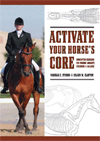
Dr. Clayton's new book and dvd set, Activate Your Horse's Core, is now available from Hoofcare Publishing. The 95-minute dvd and laminated stable manual help trainers and riders understand the biomechanical stresses on sport horses and how to develop balance and strength of movement. The cost is $50 plus $5 postage in the USA, $12 postage to the rest of the world. The set was co-authored with Dr Narelle Stubbs.

Tuesday, August 19, 2008

Golden Horseshoes: Holland's Farrier in Hong Kong


He's going for the gold. Lift up one of Salinero's shoes and the entire country of The Netherlands would believe that they are made of gold.

In the next few hours, Anky Van Grunsven of Holland and Isabell Werth of Germany go for the gold medal for individual dressage at the Hong Kong Equestrian Games of the Beijing Olympics. The two women are separated by a few one-hundredths of a point...and years of tooth-and-nail competition and micro-point finishes. Or will a dark horse come up from the ranks to take first place?

Each of the top two horses is shod by one of the world's leading sport horse farriers, Rob Renirie for Holland and Dieter Krohnert for Germany.

Anky takes her own farrier to the Olympics with her, and he is also the official farrier for his country. Rob Renirie is a cool study in composure and has an analytical eye for the horse he loves, Salinero.

In Sydney in 2000, Rob ran out into the arena to grab the bridle of Bonfire, Anky's first gold-medal winner, when he exploded from all the controlled energy after his test. Rob studies the horse and knows the rider well.

Holland had to settle for second to Germany in the team medals, and missed the use of a top horse, Sunrise, who went lame. It is all coming down to this one ride, since Anky has announced that she may retire.

If you have a chance to go to a seminar with Rob Renirie about shoeing, go. The former jumper rider turned farrier has also studied equine biomechanics at the University of Utrecht and he has created a place for himself at the pinnacle of sport horse farriery by combining the expertise of a rider, a trainer, a scientist and a skilled farrier into one person.

If you missed his four-hour master class on sport horse shoeing at the Palm Beach laminitis conference last November, you really missed something.

Someone showed me a picture of Rob taken in Hong Kong last week. It was late at night. Pouring rain. Rob with his white head was unmistakably, crouched under an umbrella with Anky's groom, Willeke. They were watching Anky school in the middle of the night, when it might be a little bit cooler. The rain didn't matter. Rob's eyes were locked on the horse's hooves. He was willing them to turn gold.

Post script: Anky Van Grunsven of Holland won her third consecutive individual Olympic gold medal in dressage in Hong Kong.

Golden Horseshoes: German Farrier Shoes the Olympic Champions

Dieter Krohnert, Official Farrier of the German Equestrian Teams

Since 1990, the German equestrian teams have not left home without him. And since 1990, they have won all the Olympic team gold medals in dressage.

Dieter is an enigmatic globe-trotter. If he sat down next to you on an airplane, you might think he was a spy. Or a race car driver. Or a hundred other things...but probably not a farrier. He is clever, inventive and thinks on his feet. Dieter pushes the envelope by narrowing his eyes and nodding, ever so slowly....and coming back from the anvil five minutes later with an answer to your problem cradled in his big hands.

Dieter brought my attention to spider-plate shoes and thumbprint heels and Luwex pads. A seminar for farriers he gave at Rochester Equine Clinic five (or so) years ago was exceptional.

Dieter's English is very good, although he is one of those people who tells you a lot if you pay as close attention to what he doesn't say. He is proud of his country and its horses and of his work.

Dieter has his own farrier clinic near Hamburg, Germany and also works with a vet clinic, so his lameness cases are as interesting as his sport horse tricks.

If they gave gold medals for farriery, Dieter's neck would be very tired from holding them all up.

Congratulations, Dieter, on Germany's three gold medals in these Olympics. One to go!